



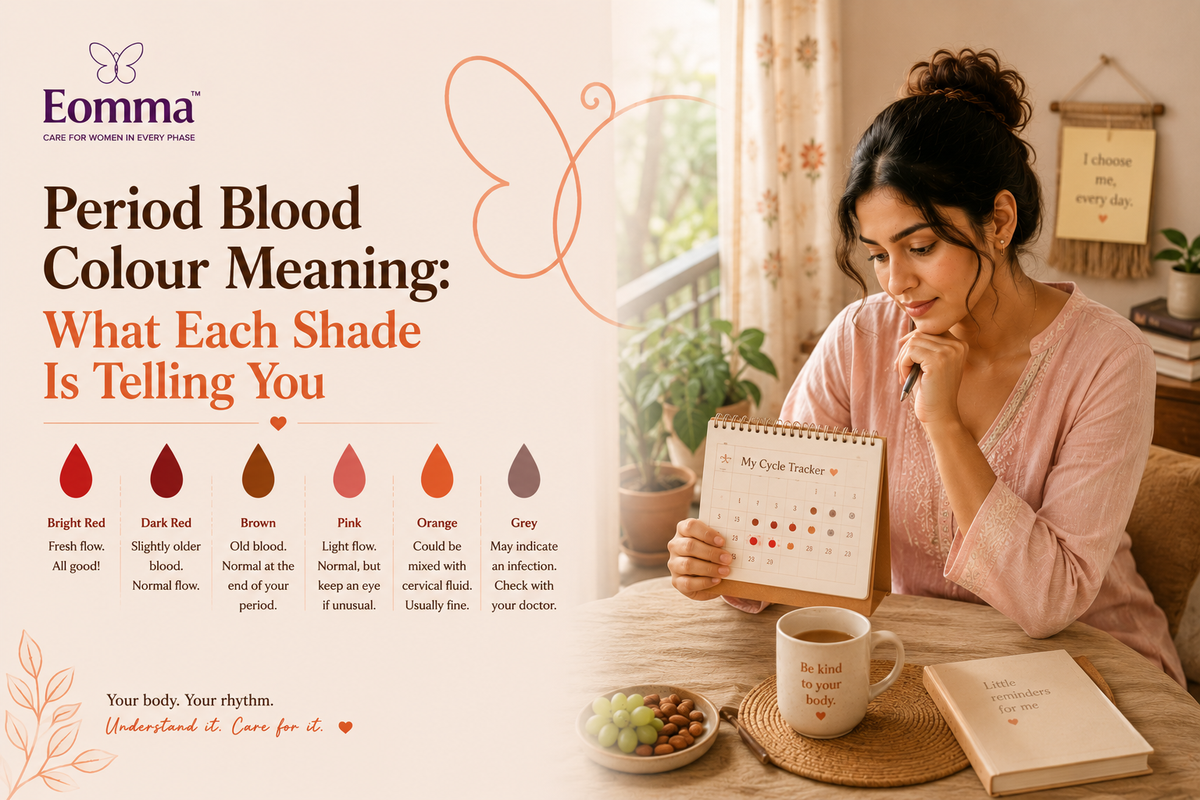
Most of us learn to read our periods by feel — how heavy, how painful, how long. Colour rarely gets the same attention, beyond a passing "is this normal?" when something looks different from usual. But period blood colour meaning is genuinely worth understanding. Most of the time it's just chemistry — how fast blood moves through your body and how long it's been exposed to air. Occasionally, though, a colour shift is a real signal worth paying attention to. This guide breaks down what does period blood colour mean, colour by colour, and covers normal vs abnormal period blood so you know when it's nothing to worry about — and when it's worth a call to your doctor.
Why Period Blood Changes Colour in the First Place
Period blood isn't a single, uniform substance — its colour depends largely on two things: how quickly it leaves your body, and how much oxygen it's been exposed to along the way. Blood that flows out quickly, fresh from the uterine lining, tends to look bright red. Blood that lingers longer — pooling overnight, or trickling out slowly at the start or end of your period — has more time to oxidise, turning darker, brown, or even black in the process. Add in normal variations in flow, hormone levels, and hydration, and it's easy to see why colour can shift not just cycle to cycle, but day to day within the same period.
The Period Blood Colour Chart
Every shade on this list tells a slightly different story about flow speed, oxidation, or — occasionally — something that needs a doctor's attention. Use this as a quick reference the next time you're wondering whether what you're seeing is normal for you. Most colours below are harmless on their own; a few combined with other symptoms are worth flagging.
Bright red period blood: This is usually blood that's left the body quickly, most common on your heaviest flow days or early in your period. Bright red period blood is generally a sign of a healthy, steady flow and isn't something to worry about on its own.
Dark period blood (dark red or maroon): Often seen toward the end of a period or first thing in the morning, dark period blood usually just means it sat in the uterus a little longer before making its way out — common overnight, when you're lying down, and flow slows. This is one of the most normal colour variations there is, and dark period blood meaning is rarely anything more than timing.
Brown or rust-coloured blood: This is the one most people already know — brown spotting before period or right after it is extremely common. Brown blood is simply older blood that's had more time to oxidise before leaving the body. It's almost always harmless in this context. Brown spotting between periods can also happen around ovulation for some people, but if it becomes a regular, unexplained pattern outside your usual cycle, it's worth mentioning to a doctor.
Pink period blood: Lighter, pink-toned blood is often diluted — mixed with cervical fluid, or simply a sign of a lighter flow day. Common pink period blood causes include the very start of a period before flow picks up, or hormonal birth control, where lighter periods are typical. Pink spotting outside of your period can sometimes be linked to ovulation or, less commonly, lower estrogen levels.
Orange period blood: Orange period blood usually means it's mixed with cervical fluid, similar to pink, and on its own isn't unusual. The exception is when orange blood comes with an unusual odour — that combination can sometimes point to an infection and is worth getting checked.
Grey period blood: This is one of the colours that genuinely deserves attention. Grey period blood or discharge can be a sign of bacterial vaginosis or another infection, and if you're pregnant, grey discharge can occasionally signal a miscarriage risk. This isn't a colour to wait out — it's worth a call to your doctor, especially if it comes with an odour, itching, or pain.
Black period blood: Black period blood tends to alarm people, but in most cases it's simply very old blood that's taken extra time to leave the body — chemically similar to dark red or brown, just further along in the oxidation process. It's most common at the very start or end of a period, or after a period of lighter flow (such as postpartum or after using certain birth control). As with brown blood, the context matters more than the colour alone — if it's paired with a strong odour, pain, or fever, that's the signal to get it looked at, not the black colour by itself.
Also Read: Menstrual Hygiene Beyond Pads: Building Healthy Period Habits
Texture and Flow Matter Too, Not Just Colour
Colour is only part of the picture — texture and consistency are worth noticing alongside it. Small clots, especially on heavy flow days, are generally normal; your body naturally produces anticoagulants during your period, but on very heavy days, blood can still clot before it fully breaks down. Clots larger than about a coin, or unusually frequent, heavy clotting, can be worth flagging to a doctor. Watery, thin period blood — sometimes more noticeable toward the end of a period — is usually just a lighter flow diluted with more cervical fluid, and is rarely a cause for concern on its own.
Normal vs Abnormal Period Blood: When Colour Changes Are Just Variation
It's worth saying plainly: period blood colour changes from cycle to cycle, and sometimes day to day, and that's completely normal. Stress, changes in diet, exercise intensity, sleep, dehydration, and travel can all subtly shift hormone levels enough to change flow speed — and therefore colour — without anything being wrong. Starting, stopping, or switching a hormonal birth control method or getting an IUD can also change period colour and consistency for a few cycles as your body adjusts. If you're otherwise feeling fine and the colour change isn't paired with new pain, odour, or a change in your overall cycle pattern, it's usually safe to simply note it and move on.
When a Colour Change Needs a Doctor's Visit
A few situations are worth taking more seriously. Grey discharge, especially with an odour, itching, or irritation, should be checked promptly, as should any colour change accompanied by fever, pelvic pain, or a foul smell — these combinations are more likely to point to an infection than colour alone ever would. A sudden, unexplained colour or bleeding change after menopause always warrants a doctor's visit. And if unusual colours are showing up alongside a broader pattern of irregular periods, unusually heavy bleeding, or severe cramping, it's worth getting evaluated for underlying conditions like PCOS or endometriosis, where colour changes are sometimes just one part of a larger picture. None of this means every unusual colour is a red flag — but pain, odour, or a fever alongside it changes the calculus.
Period Colour and Hygiene: Why It Matters for Product Choice
Beyond the health signal, colour and flow can be a genuinely useful cue for choosing the right period product on a given day. Heavier, darker-flow days — often early in your period — usually call for more absorbent protection, while lighter, pink or watery-flow days toward the end may need less. Paying attention to these day-to-day shifts, rather than using the same product regardless of flow, can make a real difference in comfort and reduce leaks, especially with breathable, skin-friendly materials on days when you're already managing extra discomfort.
Also Read: The Four Stages of Menstrual Cycle You Need To Know (And How To Track Them Effectively)
A Gentle Reminder
Your period doesn't need to look the same every month to be healthy — colour naturally shifts with flow, hormones, and even how much sleep you got the night before. Getting familiar with your own normal range is far more useful than chasing a single "ideal" colour. When something looks genuinely different — paired with pain, odour, or a pattern that doesn't match your usual cycle — that's the moment to check in with a doctor, rather than trying to self-diagnose from a colour chart alone.